There is NO SCHOOL:
January 1, 2, 19, 20, and 26
|
|
|
7:40 - 7:55: Students should not arrive prior to 7:40. All students enter through the main doors. Breakfast is served. Students may not enter the building until the bell rings at 7:40. 8:00 am: School begins 2:35 pm: Dismissal for all walkers and parent pickup 2:40 pm: Dismissal for bussers
|
|
|
January
1 - 2 - No School - Winter Break
5 - PTA Meeting @ 7:15 in the Pinecrest Media Center
19 - No School - Martin Luther King Day
20 - No School - Teacher Workshop
26 - No School - Staff Development
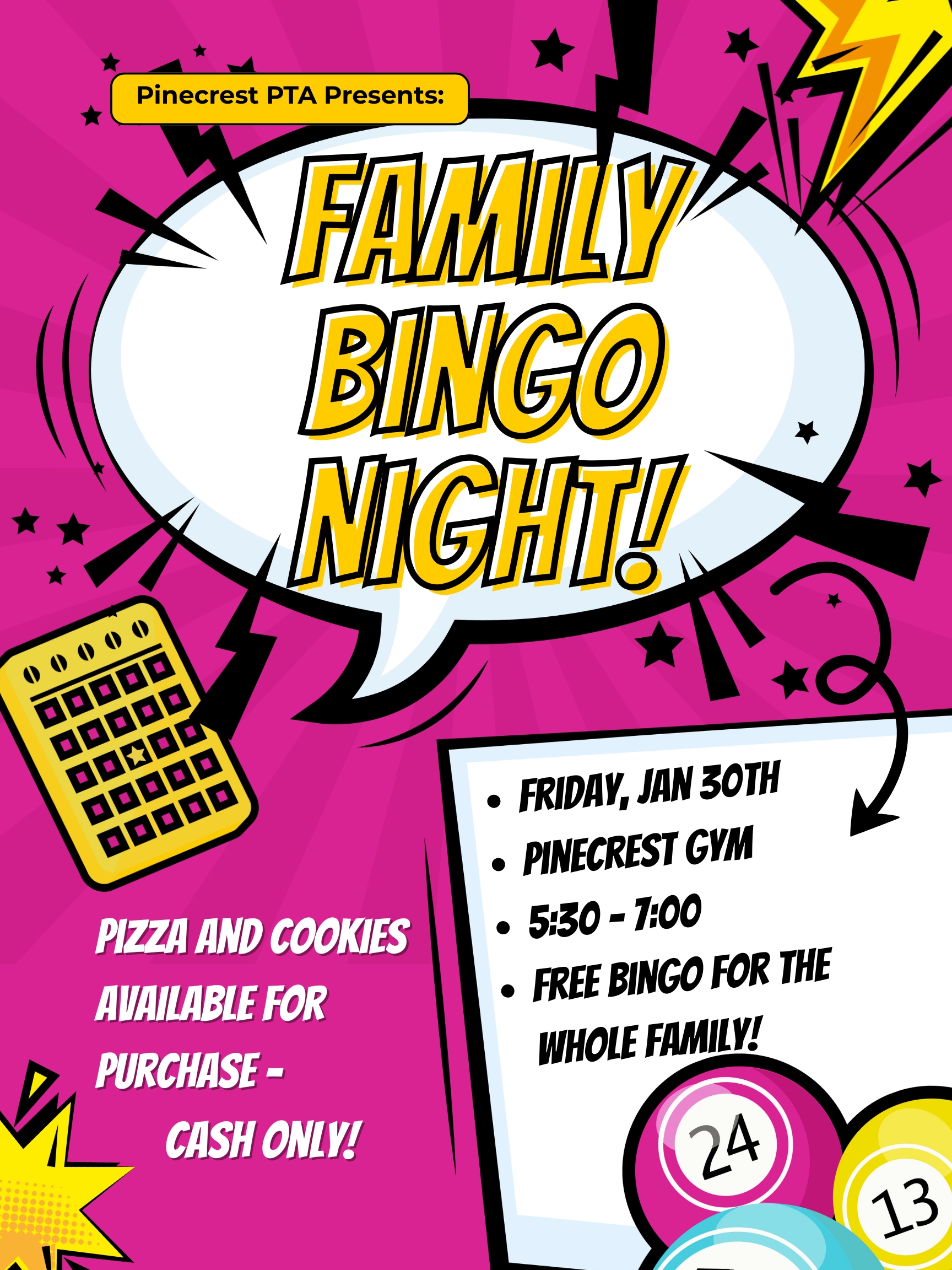
30 - Family Bingo Night February
2 - PTA Meeting @ 7:15 in the Pinecrest Media Center
16 - No School - President's Day
25 - 26 - Evening Conferences / Book Fair
27 - No School - Conferences / Book Fair |
|
|
Apply for Educational Benefits- Support Your Family
And Our School!
“Educational Benefits” are about more than just free or reduced meals—they open doors for families! Qualifying can connect you to WIC, Metro Transit Assistance, affordable internet options, and discounts or scholarships for camps, sports, and child care.
Every application matters! When families apply, it helps Pinecrest earn funding, become eligible for grants, and access programs that benefit every student in our community.
Link to apply: https://frapps.horizonsolana.com/HASS01 |
|
|
COUNTDOWN TO KINDERGARTEN |
|
|
2026-27 kindergarten registration is now open. Please register here. Mark your calendars now for the opportunity to visit our school on January 22 from 5 - 6:30 to meet kindergarten teachers. |
|
|
December PRIDE Winners
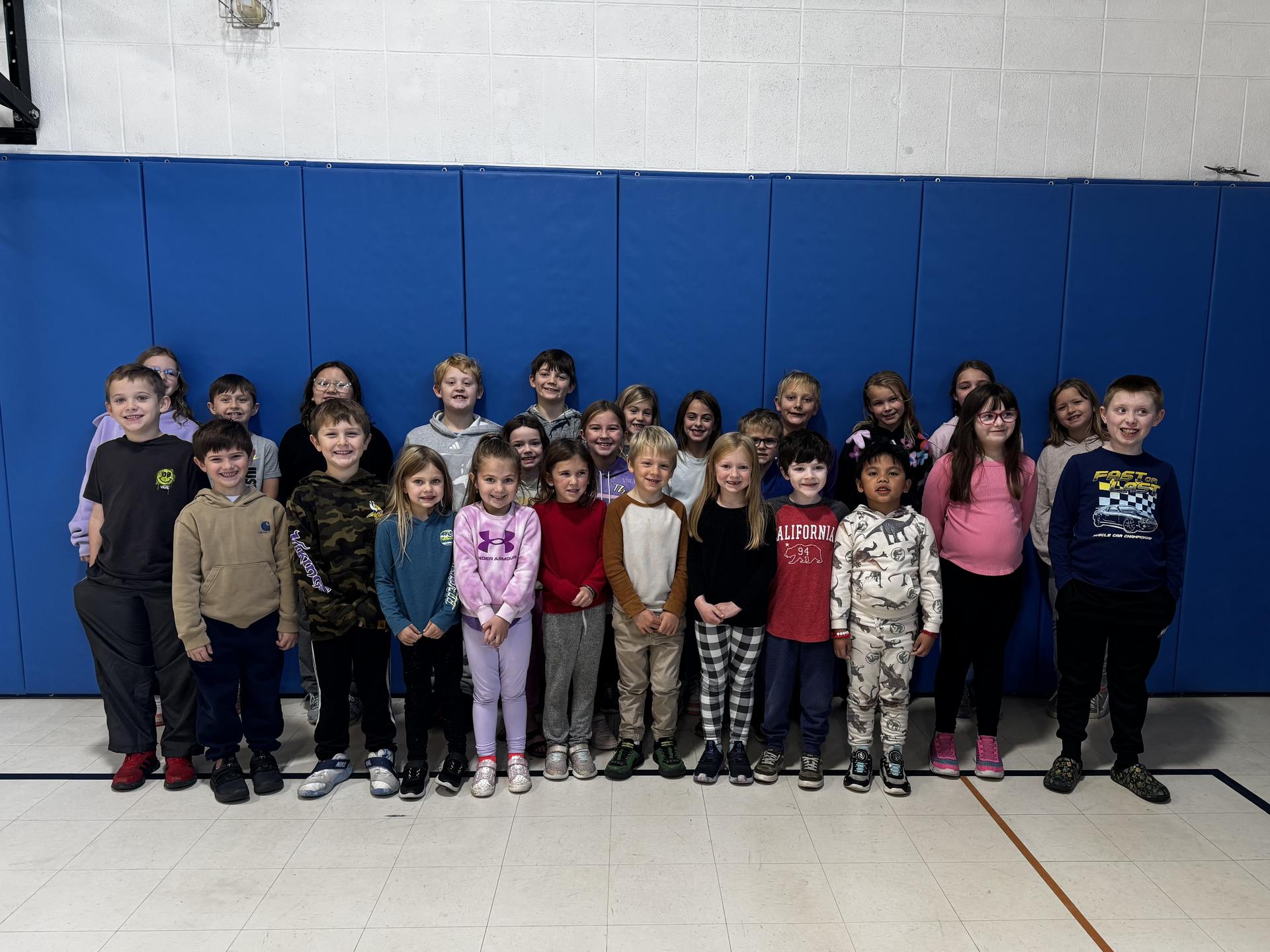
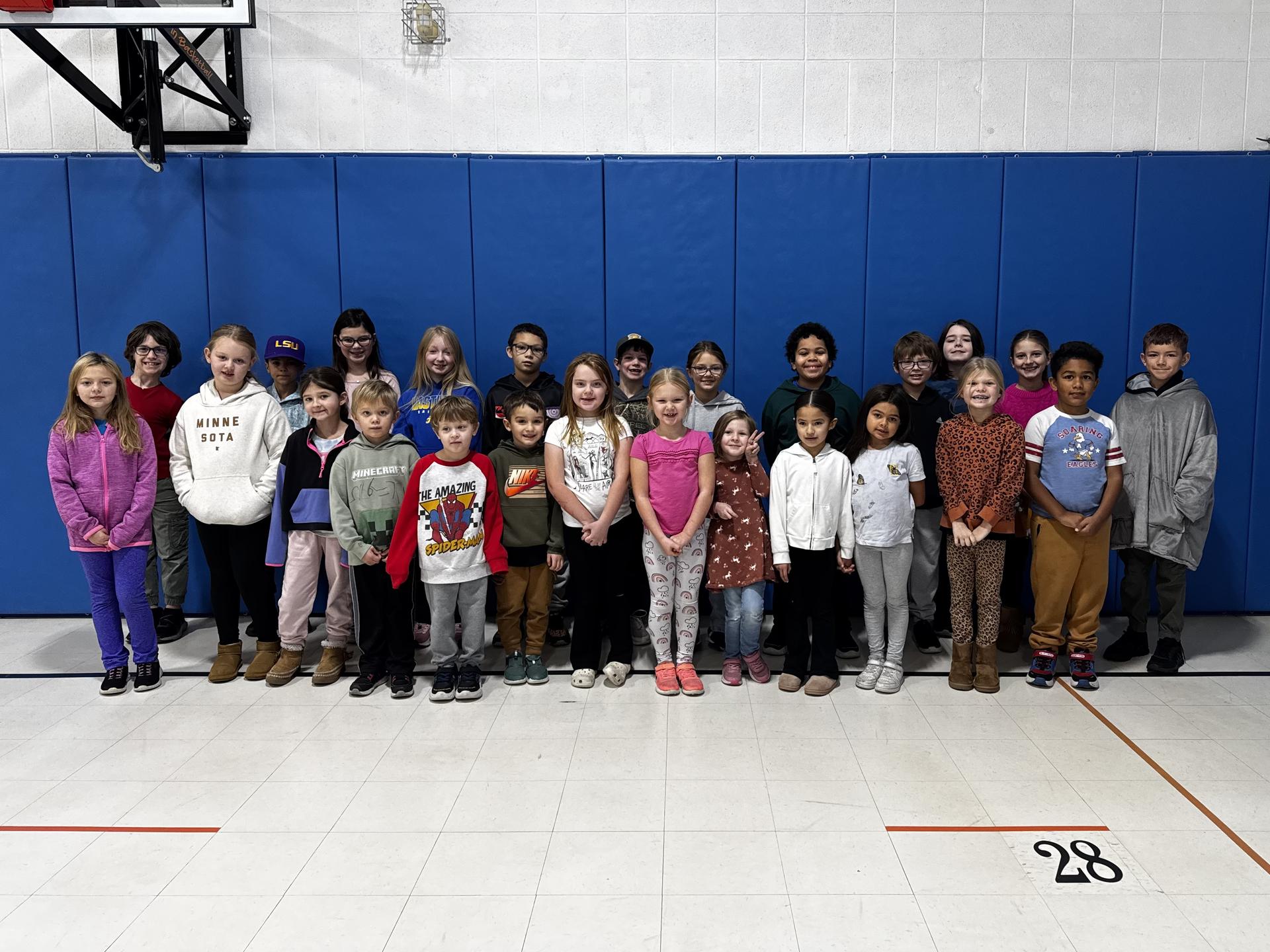
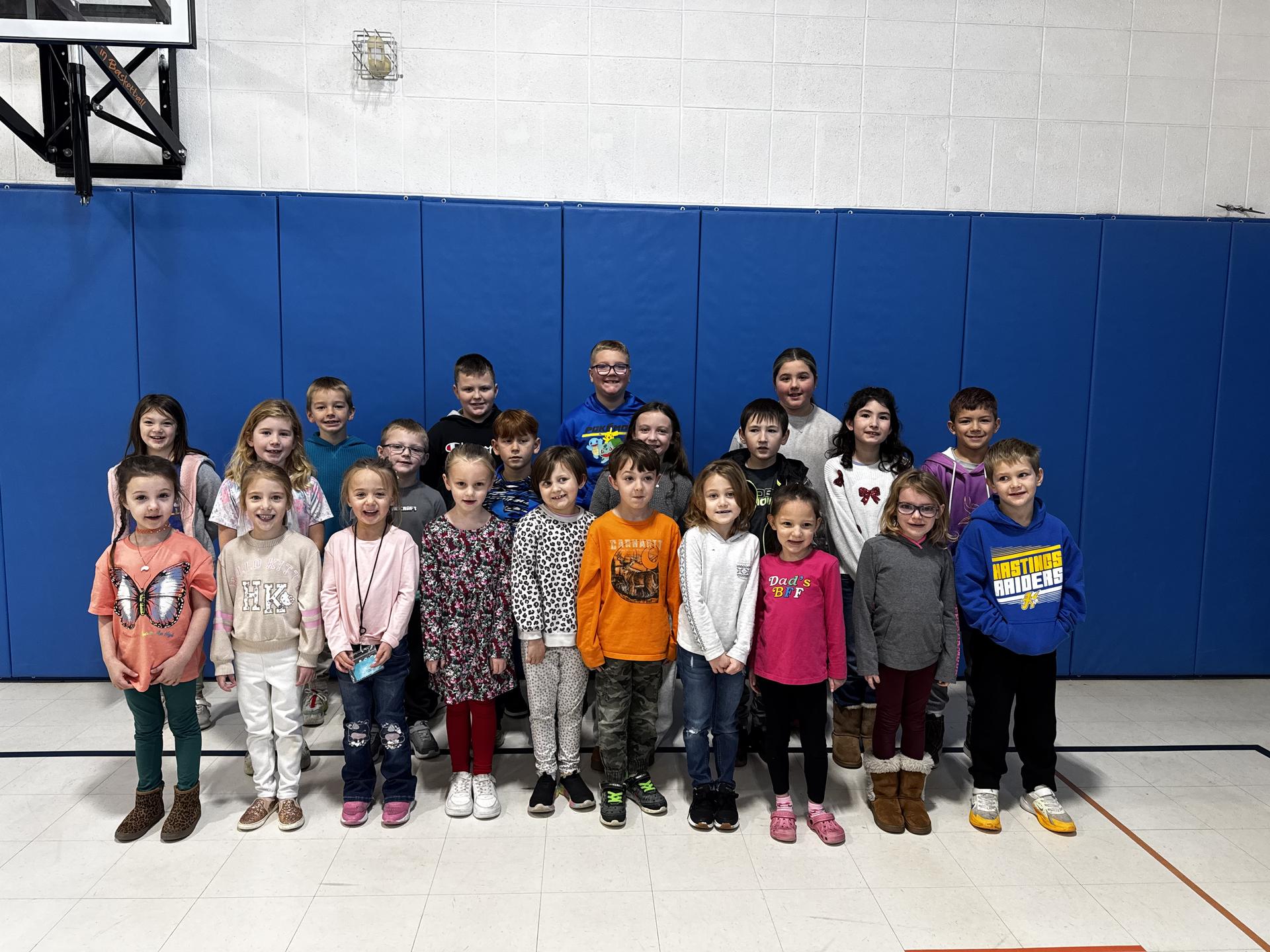
Congratulations to our December PRIDE Winners! |
|
|
Emergency School Closings
|
In case of inclement weather, activities will be shared with families in the students’ take-home folders, as well as being posted here on the school's webpage. In situations where we can anticipate the need for an e-learning day, your child may come home with their school issued iPad to help students connect with their teacher and access activities posted on Seesaw. Students with an Individualized Education Plan will follow lessons provided by their classroom teacher and/or lessons modified by their case manager. Please return completed work to school or submit it through Seesaw as directed by your teacher. The due dates for e-Learning day assignments will typically be due the next day.
*Please note, the first two inclement weather days will not have e-learning expectations in place. |
|
|
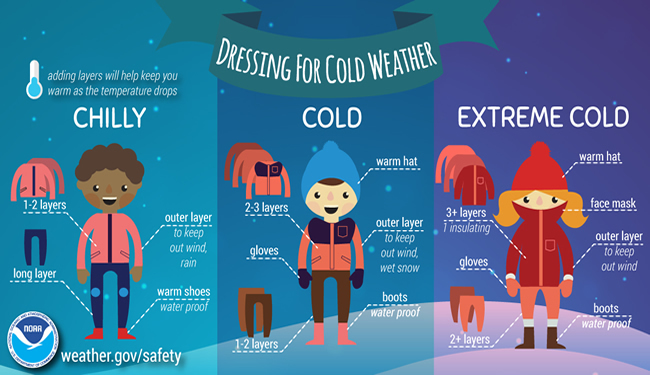
Our school often gets calls about recess during especially cold weather. Parents often ask: When is it too cold for outdoor recess?
Recess is critically important to the mental and physical well-being of children. Whenever possible, we seek to have students playing outside for recess as a break from classroom-based and other indoor activities.
While there are no national or professional standards for cold temperatures that preclude sending children outside for recess, school districts often provide general guidelines based on their local weather. Ultimately, school districts give these guidelines to building principals who have decision-making authority as it pertains to outdoor recess. While students in states that experience especially cold temperatures (that is, in places where children are expected to be dressed appropriately for cold weather) may be sent out in extremely cold temperatures, students in Arizona or Florida may be kept in when the temperatures approach 40˚(F). Other factors, such as wind and precipitation, are always taken into account, but the primary consideration is always the safety of our students.
At Pinecrest, we use the following general guidelines for decision-making related to recess: Regular outdoor recess will be held when outside air temperature with wind chill is -14° (F) or greater. The presence of rain or snowfall can influence this decision.
Limited outdoor recess can be held when outside air temperature with wind chill is around -14° (F). Indoor recess will be held when outside air temperature and/or wind chill is lower than -14° (F). Indoor recess is always an option when a principal decides that steady rainfall or heavy snowfall have created unsafe conditions.
Whenever students are sent outside in cold temperatures, building staff watch for individual children who are not wearing appropriate clothing and may be at risk. In the event that a child does not have access to clothing necessary for cold temps or snow, our schools are able to help! Just let us the school office or school counselor know. |
|
|
| Join the Pinecrest PTA! Meetings are held the first Monday of each month at 7:15 pm in the Pinecrest media center. New members are always welcome!
Visit our Pinecrest Elementary Community Facebook Page for more information! |
|
|
December was a busy month! All grades enjoyed some traditional holiday music and learned rhythmic and melodic concepts from these pieces of literature as well as various culture’s traditions focused around the holidays. In addition, we completed our first round of formal assessments. We are excited to begin preparations for another round of assessments towards the end of January.
Grade 4 completed their unit on the instruments of the orchestra and are now getting ready to go to the High School to see and hear the instruments that they can choose to play in Middle School. In December, we added a couple new rhythms to our repertoire, ti-tika and tika-ti. We will be practicing these new rhythms in January.
Grade 3 completed their instrumental skills assessment. Be sure to look on Seesaw for the recording of their instrumental performance of Ding Dong Diggy Diggy Dong. In January, we will be assessing our in tune singing of our new melodic house, High Do. In addition, we will be learning a new rhythm.
Grade 2 is busy practicing their half notes. In January we will be learning the half rest. We also learned about the repeat sign. On Music Street, we have been practicing our new house, Grandma Do. Grade 1 students are reading and writing tah and ti-ti (quarter notes and eighth notes). In January, we will add the quarter rest, or the beat of silence.
Kindergarten students just completed their assessment of instrumental timbres. From the sounds of drums, to triangles, to shakers, each instrument has a different type of sound. We are continuing our work on the steady beat of music. We have discovered that music can be fast and slow as well as loud and soft.
Be sure to bring your student to the Instrument Fair at the High School on January 27 from 5-7pm and/or January 29 from 6-8pm. At the instrument fair, students may try to play ALL the instruments of the band and orchestra. It is a FUN night for students of ALL AGES! Stay warm and Keep on Singing! |
|
|
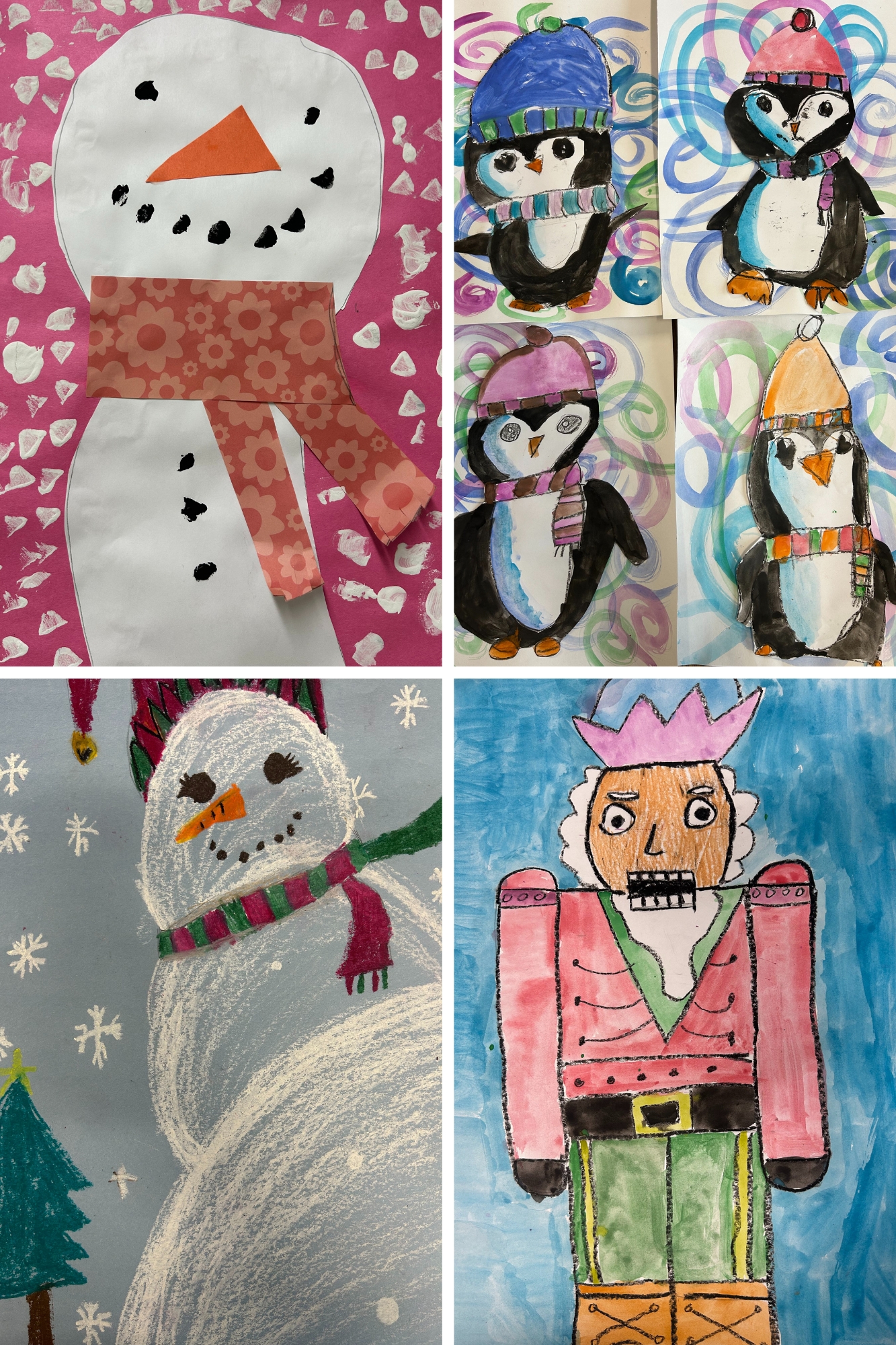
Happy New Year!!! I am hoping everyone had an amazing Christmas and break!! I am beyond happy to be back and see these amazing artists start on some new projects!! Over the next couple of months they will be focusing on the ELEMENTS OF ART (line, shape, color, form, value, texture, and space!!) Before we start that though I wanted to showcase the awesome projects the students finished up before break– inspired by everything holiday and wintery!
4th grade artists were hard at work on their NUTCRACKER paintings!! They had the opportunity to see the Nutcracker ballet in music class, so we took some time to talk about the nutcracker's role in the ballet. We also talked about the different elements we might see on a nutcracker (soldier uniform, beard, hat, and colors!) This project was awesome because the students really took creative freedom when drawing and painting their own nutcrackers!
3rd graders learned all about self portraits and how to draw them! I can’t lie when I say that the idea of drawing a self portrait is always daunting, so we had some fun with ours- turning them into grinch inspired self portraits! We mixed elements of the classic GRINCH look with features of our own faces!
2nd grade artists had a true challenge with their winter inspired project. Not only did they draw snowmen, but we learned all about PERSPECTIVE first. When drawing their snowmen they took a look at how something would look different if you were looking up at something really tall. They used this knowledge when drawing their snowmen so they appeared to tower over the person looking at the art! They then added a bunch of fun, colorful details to truly bring these snowmen to life! 1st graders have been focused on drawing animals recently and they are truly blowing me away with their talents! Their most recent project focused on learning about and drawing PENGUINS!! Of course we took it a step further to look at the difference between warm and cool colors and different places we might see those colors in!! We then focused on drawing and painting our cute little penguins!! Each one turned out to be so unique and amazing! Kindergartners have been hard at work creating SNOWMEN COLLAGES!! We first learned what collage art is. We spent a couple of days getting our papers created before cutting, gluing, and painting to finish up the awesome snowmen! Throughout this project kindergarten artists practiced cutting shapes, drawing lines, using the appropriate amount of glue, and creating dots with paint!
Take a look at some examples of these projects all these awesome artists have been working on! |
|
|
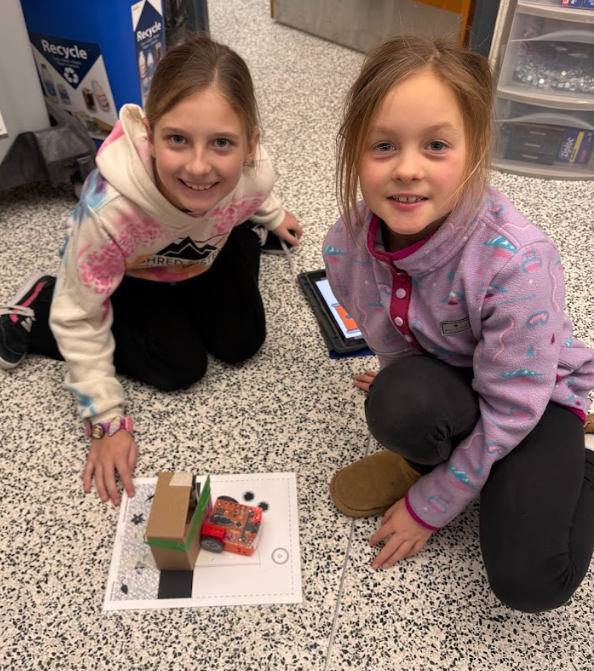
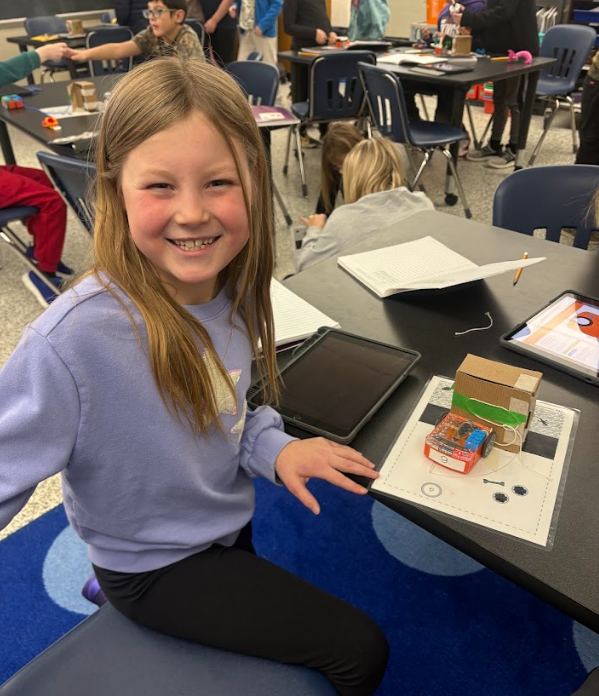
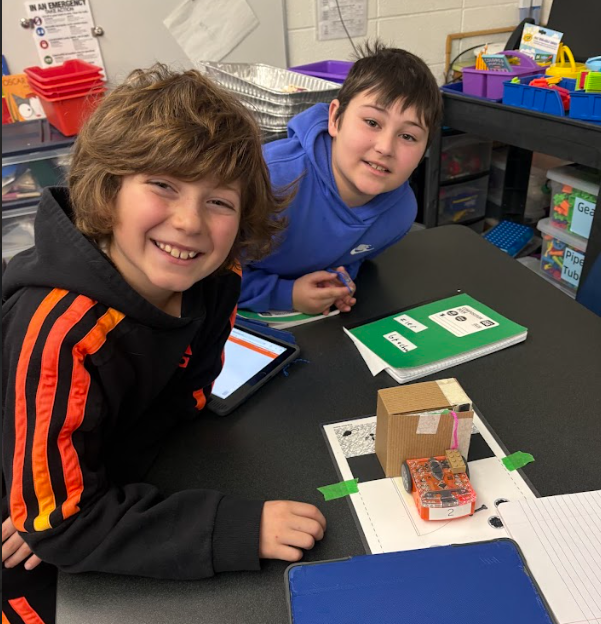
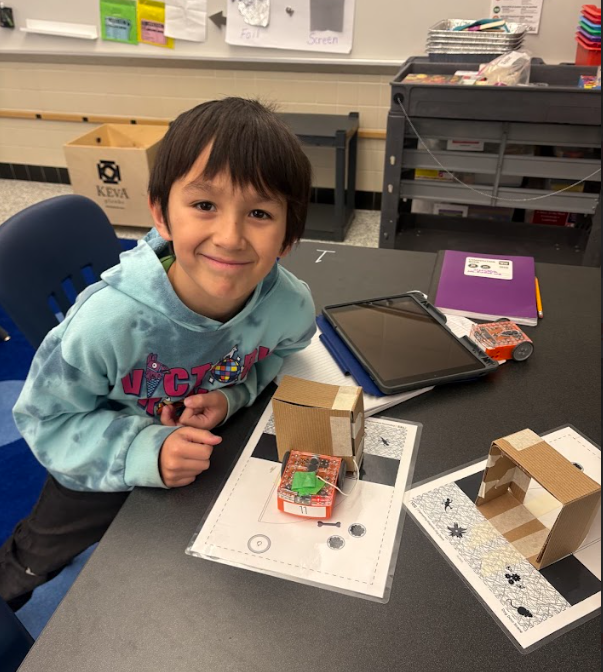
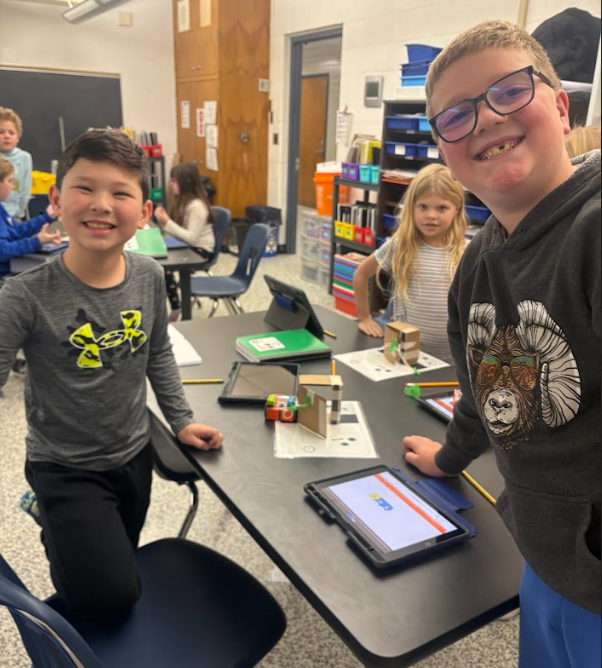
During December, our STEM students dove into the exciting world of coding and robotics! Across grade levels, students practiced computational thinking, problem-solving, and creativity as they learned how to give clear instructions to computers and robots. Fourth and Second grade students used Scratch and ScratchJr to design animations and simple games. First and Third grade students worked hands-on with Blue-Bot and Edison robots. They programmed the robots to move, turn, respond to sensors, and complete challenges, reinforcing the idea that coding is a set of precise instructions that must be planned carefully. Students in Kindergarten completed their trash collector projects in December, but they will start programming in January when they begin working with blue bots. Overall, our last month of 2025 was busy and productive! We are looking forward to 2026 and all the new challenges and adventures it will bring!
Kindergarten
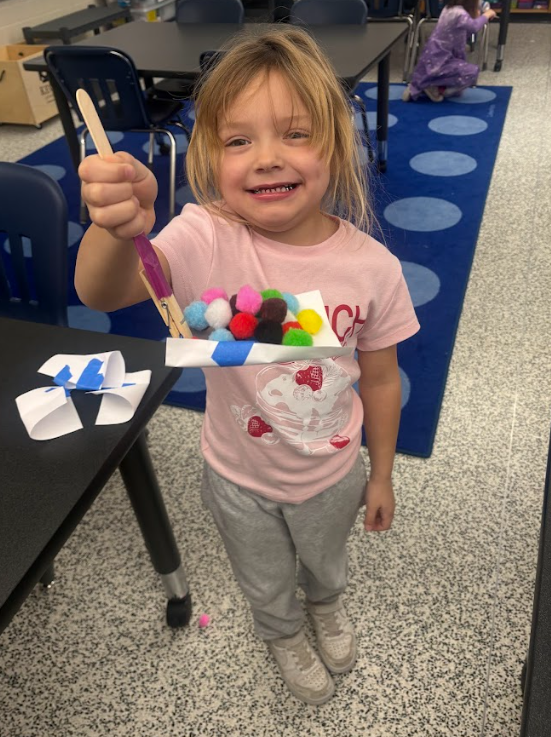
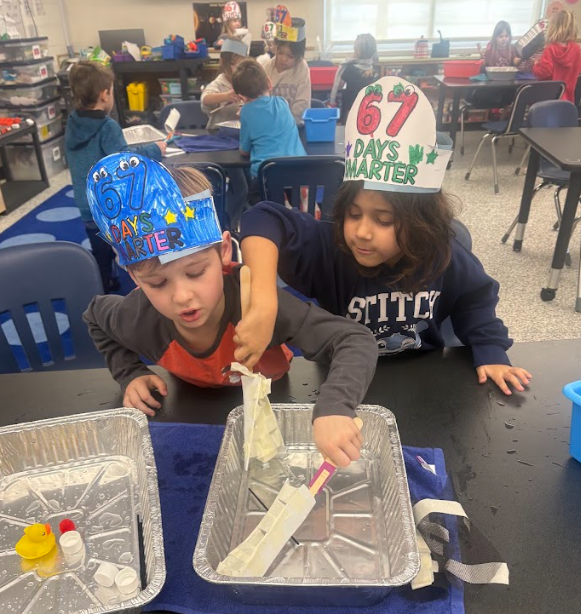
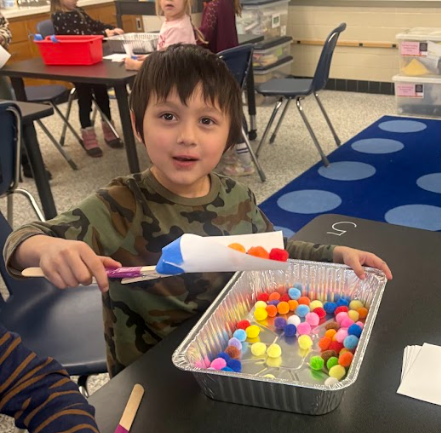
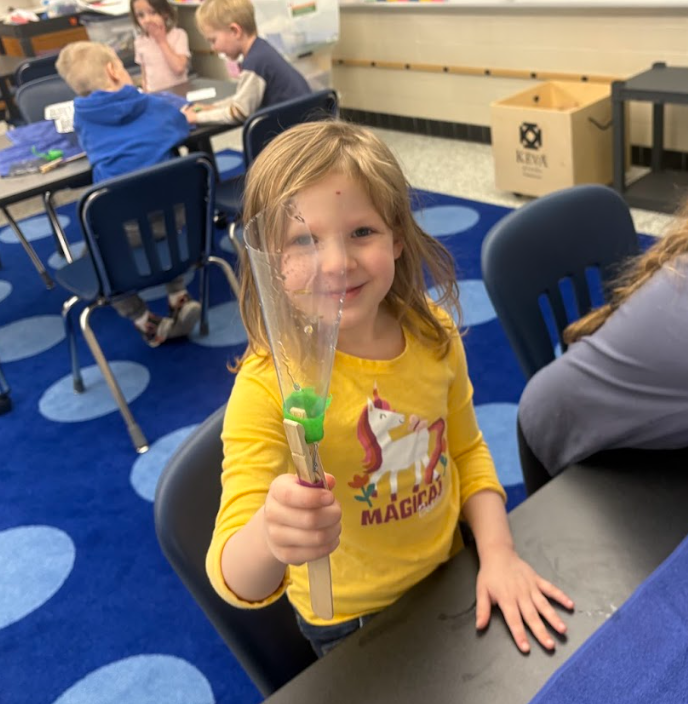
Kindergarten students were hard at work using the Engineering Design Process to create a trash collector. Students first had to decide the materials they would use. We tested aluminum foil, cheesecloth, plastic, screens, foam and construction paper to help them determine the best material for their collector. Students then tested different shapes to determine the most effective scoop. Using the results from their testing students planned their trash collector. Finally, students created and tested their trash collector. They were able to improve their trash collector after testing it, finishing a complete cycle of the Engineering Design Process! We will be working on another type of trash collector in January. This time, we will be programming a blue bot to help us sort trash from the park into trash and recycle. Look for more information about this unit to come home with your students.
|
|
|
First Grade
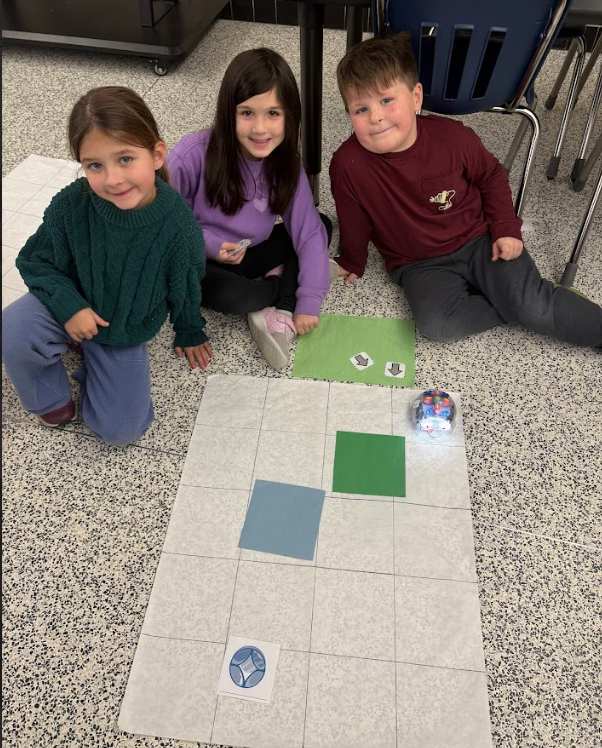
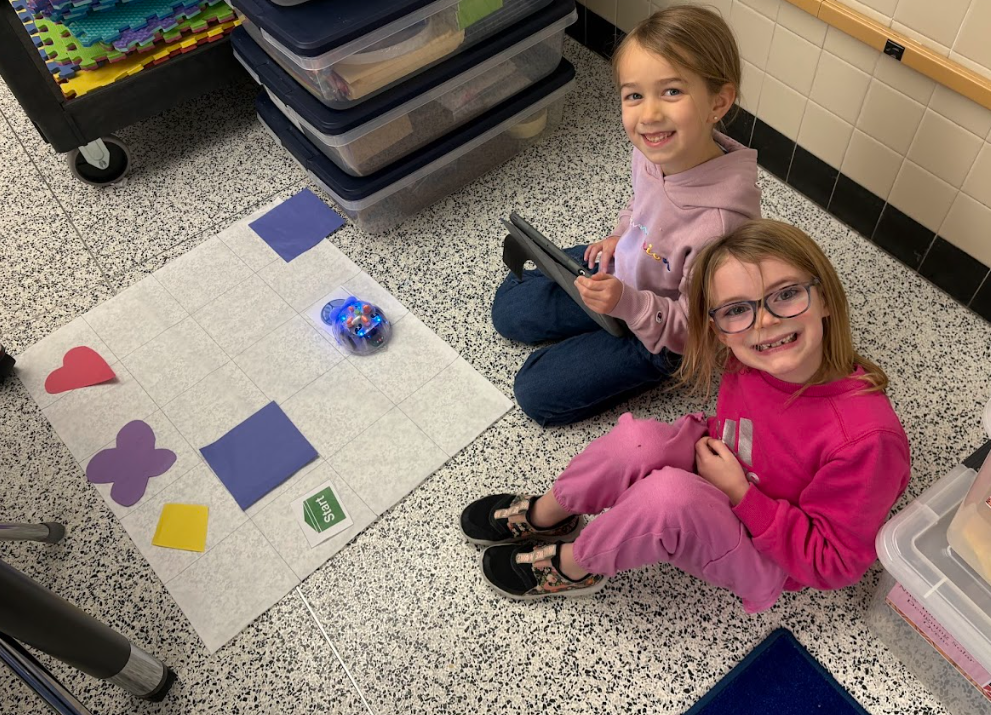
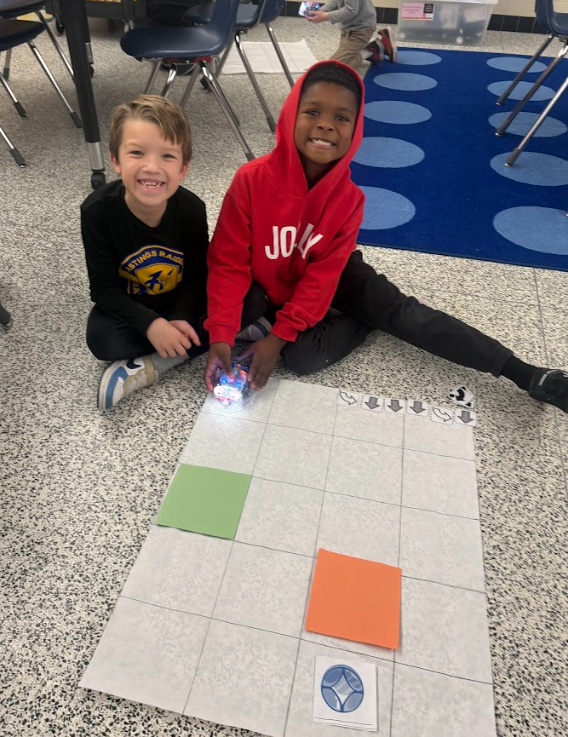
We had a lot of fun with blue bots during the month of December. Students worked on creating mazes and programming their robots to complete the mazes. Students started with easier mazes and then created more challenging ones with extra obstacles. As the challenges became more complex, students learned perseverance and teamwork while refining their programs. We utilized two tools for programming the blue bots. We used both the buttons that are on the robots and the blue bot app on the ipad to program the robots. Both approaches required a set of precise instructions that had to be planned carefully to achieve their goal and finish the maze.
In January, first graders will hear a story that introduces them to two cousins having a sleepover. The cousins have a problem in that one cousin likes to sleep with a bright nightlight and the other cousin doesn’t like as much light. First graders will be developing a night light to meet both their needs. |
|
| Second Grade
Second graders used Scratch Jr. to code animations that built off our previous work. Students selected two pollinators that we have studied and created animations that demonstrated a detail about the pollinator. For example, a student that animated a moth would utilize a night background for their animation to reflect that moths are nocturnal. Students experienced how to sequence commands correctly and how to debug a program that you have created. A favorite part for students was getting to share their animations with the rest of the class. After students shared, it was rewarding to see students learn from each other and add to their own programs based on what others had shared.
Second graders will begin working on their own gak (an opaque version of slime) recipe during January. This unit will be an introduction to the field of chemical engineering as students test different ingredient combinations and the impact on their gak properties. |
|
|
Third Grade
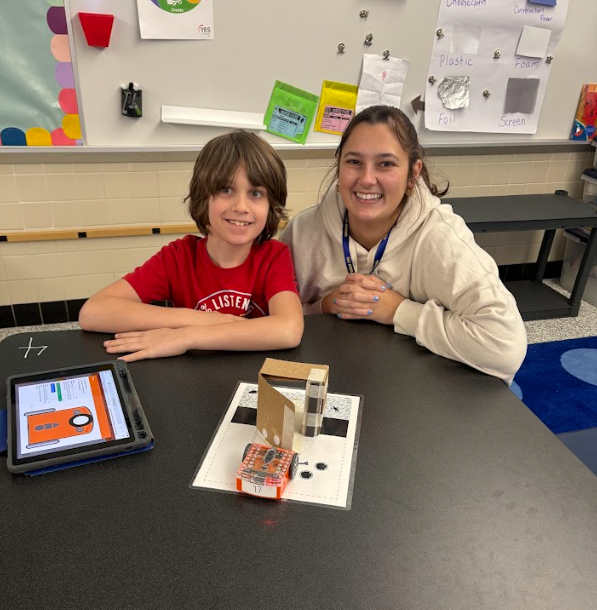
Students in third grade programmed Edison robots in December. Students started by uploading premade programs for the robots and then working up to creating their own programs. Once students had mastered making and uploading their own programs to the Edison, we moved onto our final challenge. The goal for their final challenge was to open their dog door that we previously used magnets to open, with an additional challenge option of closing the door as well. Students did well creating programs that accomplished the objective, but even more impressive was their collaboration. It can be frustrating working on programming and students were proactive in sharing their insights with students that were struggling. Students were combining their individual knowledge, skills and perspectives to achieve an outcome by communication and mutual support. Contributing in a team environment is essential for engineers because they rarely work alone on a project. Engineers that can accomplish objectives successfully on cross-discipline teams are highly valued in industry.
In January, third graders will be dissecting an owl pellet. Owls are not able to digest certain parts of their prey so they regurgitate balls of bones and fur. These balls of bone and fur are called owl pellets. Students will get to understand the diet of an owl by dissecting one of these. Students will also be learning about animal traits and will learn how to use a dichotomous key to identify unknown organisms or objects. |
|
|
Fourth Grade
Fourth graders utilized the Scratch program to develop their own computer games in December. Students began by using Scratch to complete small tasks that built on each other. Once students were familiar with the basics, they were taught how to program a clicker game and a chase game using Scratch. Students then got to decide what type of game they wanted and coded the game using their choices for characters, sounds and backgrounds. The culminating activity was students playing each other's games that they developed. Overall, this unit was effective in laying down the foundational programming concepts like computational thinking and problem-solving. Students practiced breaking down their complex ideas into smaller tasks to create step-by-step solutions that they then translated into code. Once they had their code, they had to troubleshoot and fix any bugs.
Our next unit will be focused on light and circuits. Students will be learning about light waves and how they interact with matter (reflection, absorption, transmission and refraction). Students will also be making a circuit to produce light using a button battery and an LED bulb. |
|
|
Order your Spirit Wear! Can be customized to our school! |
|
|
|